
The Hardest Job in the World
“You are the president of two hundred million Americans. I am the prime minister of three million prime ministers.”
— Golda Meir, to Richard Nixon
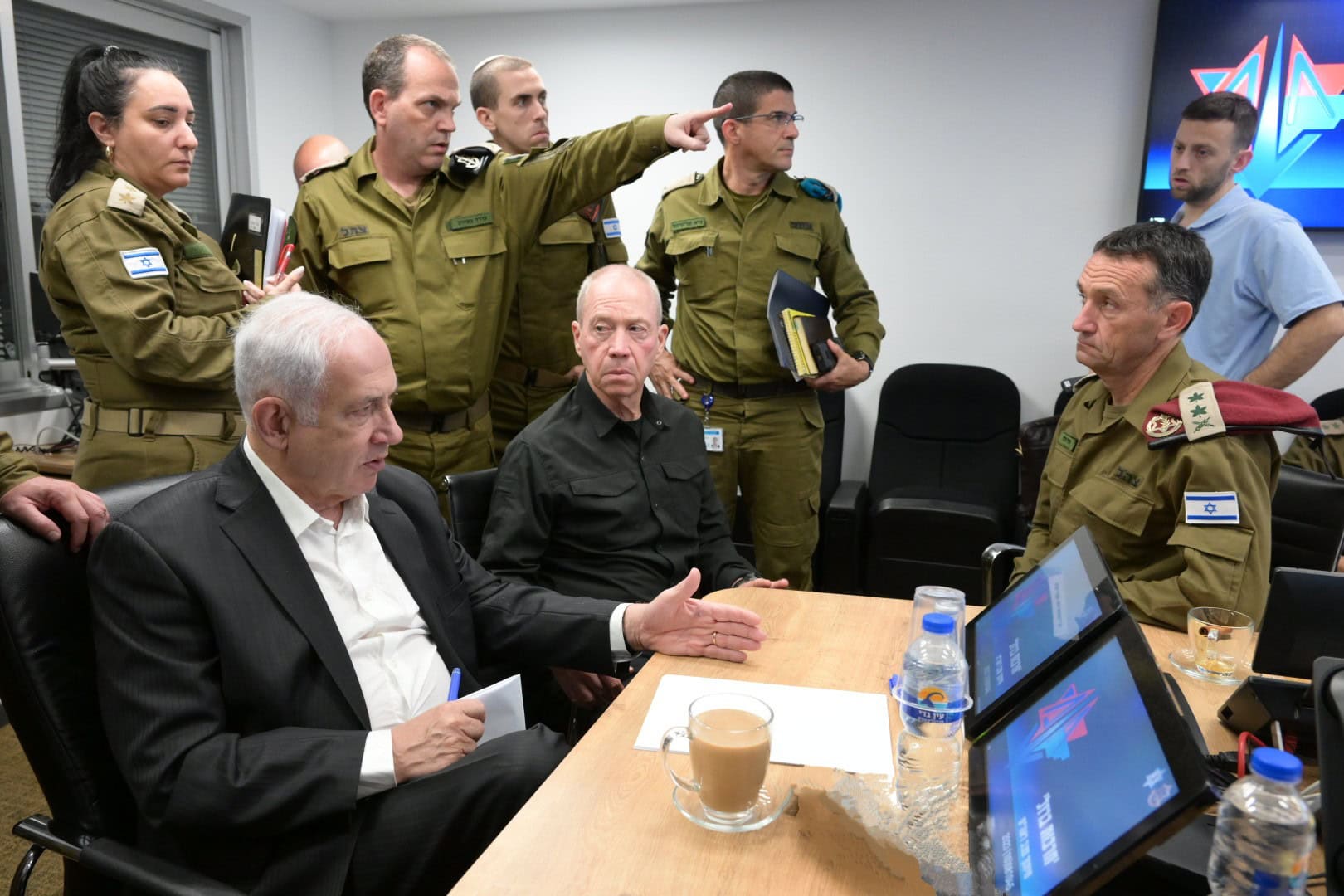
Lists of difficult jobs are usually lists of large responsibilities. In politics, that frame is incomplete. Difficulty is not merely scale. It is the ratio between what an officeholder is accountable for and what he is permitted to do, levered by how securely the office is anchored, because in a parliamentary system any given decision may be the last one taken. Measured that way, the hardest job in the world is not held by the commander of the world’s largest army or the steward of its largest economy. It is the Office of the Prime Minister of Israel.
The usual candidates do not survive it. The President of the United States commands more of everything, but his constraints are domestic and mostly of his own system’s making, errors are amortized over a continent, a Congress and at least two election cycles, and his four years are effectively guaranteed – no president has ever been removed by the process built to remove him. A Westminster System prime minister is exposed to two levers, the electoral cycle and the confidence of a majority of members of parliament; and the second is usually his own side’s to pull. The leaders of China and Russia enjoy a latitude no democrat can, and answer to no electorate able to remove them at all. European premiers govern real states with real problems, and not one of them wakes to a live question about whether their state should exist.
Everywhere else the scale arrives with room to move, or the tenure with a floor beneath it. In Jerusalem, neither. The accountability runs to everything, the permission to almost nothing, and the parliamentary confidence that sustains him is assembled out of factions, any one of which can withdraw it over a grievance, in a week.
Begin with everything you know and everything that is obvious, then set it aside. A small country the width of a commuter drive, encircled by states and movements that treat its elimination as a program rather than a grievance. No strategic depth. No recoverable margin for a bad week. Errors here are not corrected in the next budget cycle; they are corrected at funerals. All of this is understood, and it’s legible. A nation can organize itself around a visible enemy, and this one does so remarkably well. None of it is the hard part.
The Price of Survival
The hard part is the condition the job is conducted inside, and it is almost never described. Since 1973 Israel’s military capacity has been underwritten by the United States, and the airlift that saved the state in the Yom Kippur war also priced its terms. What was purchased was not obedience, which would be crude and reversible, but something far more durable: survival in exchange for a dependency that converts every operational decision into a diplomatic one.
The Prime Minister does not command an army in the ordinary sense. He commands an army whose resupply clock runs through another capital. He fights wars he is not permitted to conclude. Sometimes he is not permitted to answer at all, as when, in 1991, ballistic missiles fell on Israeli cities for weeks and the state was pressed to absorb them without reply, and did. The ceasefire arrives not when the objective is met but when the sponsor’s tolerance is exhausted, a variable responsive to election calendars of voters he does not reach and news cycles in cities that will never be shelled. For a generation the answer to this constraint was speed: conclude the matter before the diplomatic machinery could close around it.
The leverage does not stop at ordnance, nor has it historically needed to. Ordnance alone might be a manageable problem; in theory, stockpiles can be built and industry nationalized. What the sponsor actually holds is the state’s juridical standing in the world. The veto that prevents hostility from being converted into law. The recognition that keeps the ports open, the currency financeable, and the airline insured. The cover that keeps an embargo in proposal form rather than becoming a regime. These cannot be taken for granted. At Suez they were, and the aftermath revealed them for what they are: the collateral held and called – Israel was forced to unilaterally surrender its hold on the Sinai peninsula under direct threat from the President of the United States – at a moment when Washington was arming it with nothing. The aircraft and the armor were French. So the Prime Minister does not merely negotiate over an arms shipment or a bond guarantee; he negotiates with a partner whose displeasure can be expressed as an open question about whether his country is entitled to exist in its present form. The chip on the table is legitimacy, and behind legitimacy, viability. No other head of government, anywhere in the world, enters a routine disagreement with an ally knowing that these are the table stakes.
Dependency is not unique. Most states subordinate some portion of their sovereignty – to an alliance, a currency, a market, a patron – and many do so comfortably for generations. Others have paid catastrophically for it. What is unique is the file the Prime Minister carries into every such calculation. His nation holds thirty-eight centuries of experience of what follows when its existence becomes conditional on someone else’s permission, and the record is not ambiguous. Where other nations weigh dependency as a risk, his weighs it as a precedent.
Even so, dependence is not paralysis either. A sponsor who handcuffs his client destroys the asset he is paying to maintain. The client must retain existential latitude or the arrangement returns nothing, and Israel has used that latitude to act. What is serially withheld is the finality of the act.
October 7, 2023 made the dynamic visible. By October 8, before the dead had been counted and before a single soldier had crossed into Gaza, Israel’s enemies were already invoking the constraint against a response that did not yet exist. The demands for restraint arrived ahead of the thing to be restrained. The warnings about proportionality preceded the operation they were meant to govern, and the juridical machinery followed within months. A state attacked in its homes stood accused before its defenders fired their first shot. Whatever latitude had been assumed to survive the extreme case did not survive it, and this was the extreme case – the largest single-day slaughter of Jews since the Holocaust, suffered by the one state founded so that it could not happen again. If constraint holds there, it is not proportional, conditional, or even provoked. It is embedded. It is structural to the office.
And the constraint does not merely bind him in war. It shapes the policy that produced the war and its aftermath. A system that forbids resolution does not produce peace. It produces management. Containment instead of defeat. Mowing the grass. A hostile statelet tolerated on the border and its apparatus financed through channels everyone knew well and understood, because settling the question was the single option permanently unavailable. October 7 is what an unresolved question eventually charges. And the constraint is not only imposed on him from outside; it is available to his enemies as a weapon – an attack calculated to produce a response whose international closure was foreseeable, and arguably was the entire point.
None of which explains or excuses the failures that allowed the massacre. No foreign capital prevented Israel from guarding its border, stopping the attackers, or moving its forces in time. Those failures belong entirely at home, and its voters will reach their verdict. But they occurred inside a doctrine of permanent management, and management, even today, remains the only posture on offer.
A Tuesday Morning
Around all of this sit the humdrum layers that individually end any other premiership. Territory whose final shape rests in someone else’s in-tray, contested not only by adversaries but by allies who describe lawful administrative acts in the very center of its history and culture as unilateral, and treat the capital as an open question; a building permit in one postal code is zoning, in another an international incident, in capitals that have no stake in the outcome and no perspective on its reasoning. A democratic frame of pure proportional representation, a single national district, and coalitions assembled from factions, so that his cabinet is not a team but a room of rivals, each with an electorate, a broadcaster, and a credible theory of his own eventual premiership. Several are on the record about it. The smallest partner holds a veto on the largest question, and no other democratic executive negotiates his own survival weekly while deciding whether to commit the nation to war.
And beneath the coalition, the retail politics, which he cannot delegate to anyone. With no districts there is no constituency to be held by service; his standing is contested inside his own party, where the lists are set and leaders are removed. Branch meetings. Committee arithmetic. Appointments traded for loyalty. Primaries that can finish him faster than any general election. The man who was on the phone to Washington at three in the morning about a munitions release is expected that same day at a party gathering about a committee seat, and the second errand is not optional, because losing it costs him the list, which costs him the party, which ends the first conversation permanently.
Beneath that, the ordinary state: budgets, hospitals, schools, crime, housing, water, ports, an aging grid, the economy, food prices, energy, environment, the permanent absorption of new citizens. Here, ambient noise. Anywhere else, a career.
Beside it, a diaspora holding no citizenship, paying no tax, and bearing no conscription exposure, which nonetheless asserts standing to define the national interest and exercises it through donors, denominations, universities, editorial pages, and decisively through the internal politics of the sponsor. The claim is not baseless, because they do pay, in a currency the Prime Minister’s Office neither controls nor collects. His decisions are answered on their streets: synagogues are burned, schools acquire guards, and communities are made to account for a policy they had no part in setting and frequently oppose – opposition that buys them no protection, since the reprisal does not read the op-ed page first. It is a kind of hostage logic distributed – a pressure point placed on the premier where he cannot reach it, borne by people he cannot defend and did not ask. So he must weigh a real cost falling on people who cannot vote him out. And he still cannot defer to them, because his accountability runs to the voters who will bury their own children.
And every decision he takes on that land is received by a constituency of billions. Jerusalem is sacred to more than half the people alive, so a routine security measure on a thirty-five-acre platform is not experienced anywhere as municipal administration. Some of that response is genuine. Much of it is manufactured, by people who know precisely how quickly a checkpoint can be rendered as a desecration and how useful the resulting riot will be. Either way he has to price it before he acts, and no other head of government takes decisions that two billion people are told, within the hour, they have a stake in.
And over all of it, description. A domestic press adversarial by tradition, a foreign press working from a vocabulary fixed before the event occurred. He may sometimes determine the outcome. He can almost never determine the account of it.
And beside the press, a tier of institutions that assert standing without holding any. Human rights organizations, commissions of inquiry, treaty bodies, the General Assembly, the courts at The Hague and many others. None is accountable to an electorate, his or anyone else’s, and several are funded by governments that prefer their policy expressed removed from their administration to preserve deniability. Their output is not merely rhetorical. A report becomes a finding, a finding becomes an order, and the order becomes the basis on which some other country’s courts suspend an export license – which is how an embargo stops being a proposal. He cannot appeal, because there is no court above them. He cannot outlast them, because the proceedings never conclude and no acquittal is on offer. And he cannot decline the jurisdiction, because the declining is entered as “evidence”. Participation concedes the authority. Refusal supplies the verdict.
And underneath all of it, a layer with no name: the reading of the sponsor itself. Not every demand serves the interests of the capital making it, and the Prime Minister is the only person obliged to decide, in real time and on partial evidence, which kind of mistake he is looking at. It may be error, a decision taken badly by people who would take it differently tomorrow. It may be ignorance, a judgment reached by officials who do not know the ground and have no reason to suspect they do not. Or it may be deliberate, a move made for reasons he has not been told and will not be told, in which case what presents as a blunder is a policy. The three call for opposite responses, the evidence rarely separates them, and he cannot resolve the question by asking, because the asking is itself an accusation.
Then he must act on his reading in both directions at once. Upstream, he has to correct a superpower without appearing to instruct it, which in practice means arranging for it to arrive at his conclusion in its own time and under its own name. Downstream, he has to account to his own public for a decision he did not make, may not agree with, and cannot attribute honestly, because saying plainly that the ally is mistaken, or is being led, is a cost the relationship will charge him for later and in full.
In the Same Hour
But inventorying challenges is not the answer to the question. Any competent government handles hard problems. What distinguishes this office is that the problems arrive simultaneously and compound on themselves, so that none of them can be touched in isolation. It is not administration. It is orchestration. A decision moves the coalition. The coalition moves the budget. The budget moves the street. The street moves the sponsor’s domestic politics. That moves the resupply clock, and the clock moves the next decision. Taken for mundane reasons, a single choice is in the same instant a coalition decision, a diaspora decision, a currency decision, and can easily metastasize into a legitimacy decision. He must hold every one of those registers in his head in the same hour, on partial information, with no possibility of deferral and no colleague who is not also a rival.
And the sponsor is not one thing. It is an administration, a Congress, two parties, a press, an electorate, and, crucially, a permanent bureaucracy. They do not necessarily agree with each other. Every client state learns to read this. None does it as often, or under fire, and no other client is itself a live argument inside the sponsor’s electorate – Seoul and Warsaw negotiate over basing and budgets, and neither is a subject of American campus politics. So a demand he cannot meet may still be defeatable, by going over the administration’s head to the legislature or to the public that elects it. But a won argument is not a delivered one. The bureaucracy can defeat the most enthusiastic supporter without ever contradicting him – a license slow-walked, a condition attached at the final stage, a review opened that outlasts the urgency. And that public is not reached by speeches. The ground on which the sponsor’s opinion actually forms – policy institutes, university faculties, advocacy organizations, the platforms where the young acquire their politics, church pews – is contested and funded terrain, worked for decades by adversaries with deeper pockets and no obligation to disclose where the money came from. He has to operate there as well, and when he does the activity is called foreign interference, while the identical activity by the other side is called advocacy. He cannot win the sponsor’s public without entering that field, and he cannot enter it without confirming the charge. That option is always available and never free. Using it makes a personal enemy of the executive he will still depend on tomorrow, and it moves his country from a shared commitment to a contested one, which mortgages not only this administration but the next and the one after it. And it does nothing about the permanent staff, who absorb the insult and run the tab. Administrations turn over. The desks do not. Sometimes it is the right call. It is never a safe one, and the bill arrives after he has left office.
Longer Than a Career
Then there are the decisions – the ones with a capital D – that do not only save his own people. They save everyone, including the capitals that condemn him for taking them. What his state judges existential is frequently a danger the world has already examined and declined to remove – not for want of seeing it, but because the political cost of acting was more than anyone cared to pay. So the act that spares his own country spares everybody else as well, at no cost to them and at every cost to him. In 1981 the reactor at Osirak was destroyed and Israel was condemned by all of them, its sponsor included, in a Security Council resolution the United States voted for. Ten years later, with Iraqi armor in Kuwait, the same governments were privately grateful. The benefit had been the world’s. The decision, and the price of it, his alone. That is the shape of it. Decide, absorb the condemnation, and endure the interval – which may run a decade, or longer than a career, or longer than a life.
And he must conduct all of it while pursuing the only project that actually matters: finding a route through dependency to some other relationship. Not rupture, which is suicide. Not permanence, which is subordination dressed as alliance. Graduation – the industrial base, the alliances, the deterrent, and the diplomatic standing that will one day let the state act on its own account and be answered to rather than answer for. That project has to be pursued using instruments the dependency itself controls, on a timeline no electoral cycle will accommodate, and without ever stating plainly what is being attempted, since to state it is to invite its prevention. It is the hardest thing in the job, and it is the only part of the job that is not defensive.
Thanks at the Funeral
And it is an office in which thanks arrives only at his funeral. The pattern is older than the state: the man who brought them out of Egypt was not permitted to enter. It is also institutional rather than tragic. The men and women who took the decisions that mattered were, at the moment of taking them, the most reviled figures in the country, and the state’s own machinery was the instrument of it. The founder was maneuvered out of his own party and ended in the desert. The premier who held the line in 1973 was destroyed by the reckoning over a war she did not start. The man who made peace with Egypt withdrew after Lebanon into a silence he kept until he died. Each was reappraised afterwards. The verdict is revised at the graveside. The eulogy is delivered by the institutions that spent the previous decade demanding resignation if not prosecution, and the decision praised in the oration is frequently the one that was called treason when it was taken. Whoever holds this office submits to judgment by a generation he will not live to meet.
That is why being Prime Minister of Israel is the hardest job in the world. Because the sovereignty he stewards was not born from independence, but has, since 1948, remained in a form of gestation. He is neither its creator nor its guarantor – he is its midwife. His only job is to advance its emergence, to refuse to let its delivery be stopped despite the succession of empires that have conditioned his nation’s existence from Assyria and Babylon through Persia, the Greek successor kingdoms, Rome, Britain, and now America, each in turn insisting, for their own imperial reasons, that sovereignty be postponed to a more convenient hour. And no one thanks the midwife. The delivery, when it comes, may be noted. What it took will not, except by those who were in the room, and only for as long as they live.
__________________________
Raviv Laor examines systems and exposure. He is CEO of StratusX, a cybersecurity firm for the AI age, and author of the forthcoming Israel First: Sovereignty and the Permission Architecture.