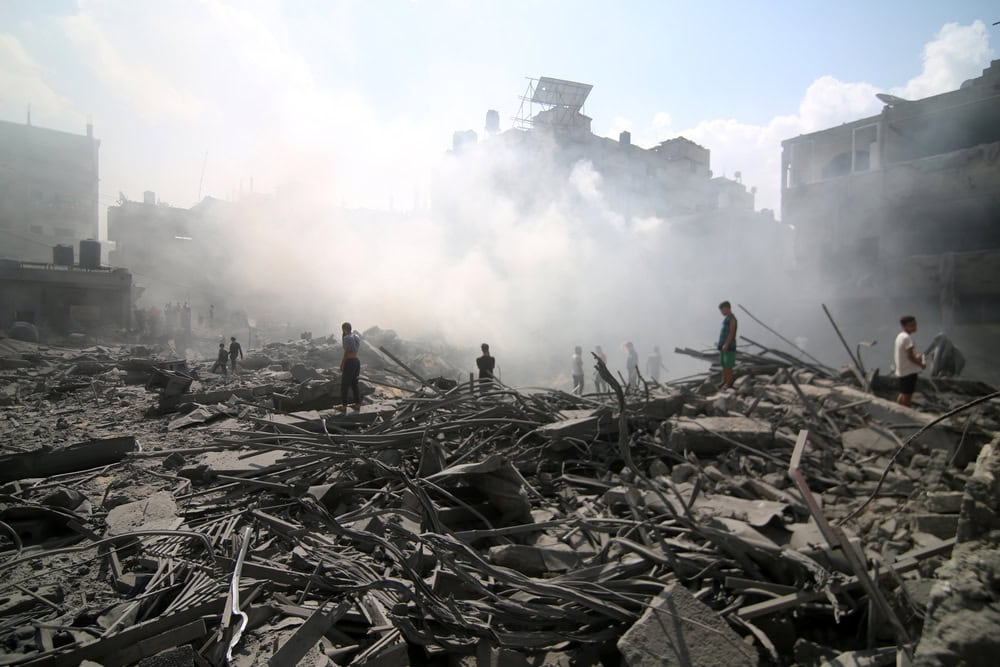

Our world has been trapped in a war that has lasted for fourteen centuries. After the death of the Prophet Muhammad, Islam launched a battle against the values of the Christian West, and that battle has never truly ended. It pauses from time to time, only to erupt again.
This endless war affects countless people in many countries, often without them even realizing they are bound by it. When we hear the phrase “an eternal war between the West and Islam,” we tend to picture scenes of armies and crusades. Yet, today this conflict is far more complex and sophisticated than it has ever been in the past. The war has spread to nearly every corner of the globe. That is why we must recognize it, despite America’s reluctance to do so, as nothing less than a Third World War.
Consider this: the world is now divided into two broad camps, each comprising a vast network of allies. The clearest example is the United States facing off against Russia and China, but beyond these three powers lie many other partners on both the Western and anti-Western sides. Iran, for instance, stands with Russia and China, while the United Arab Emirates aligns with the United States. Azerbaijan supports the West, while Armenia until recently supported the anti-Western bloc, even though Azerbaijan is a Muslim state and Armenia a Christian one. In truth, this Third World War stretches across twenty-one fronts of conflict, each demanding attention at the same time.
What makes this endless war remarkable is not only its global scale, but also the fact that it pits three distinct enemies against each other. The first of these enemies is Islamism. The Muslim Brotherhood leads political Islam both in Europe and in the United States. Its purpose is to ensure that Muslims in the West see their loyalty not to their host countries nor to their countries of origin, but to Islam itself.
Who represents Islam in Europe? The Muslim Brotherhood. What began as charitable work has become the organization of violent protests against Western values within Western societies. It is important to remember that Hamas itself originated as a branch of the Brotherhood in Gaza. The difference is that Hamas reached a point where.
The second enemy in this endless war, which has become a world war, is communism. Communism poses a direct and central threat to the West. It is part of an alliance of unelected dictatorships determined to subvert Western values and dismantle democratic institutions. The fear of a communist takeover of the West is far from exaggerated, for communists employ seven different strategies of warfare to weaken America and its allies: physical warfare, cultural warfare, economic warfare, demographic manipulation, and even cyber and space warfare.
At the head of this communist force stand Russia and China. Although Russia is both European and Christian, it is culturally very different from Western Europe, where liberalism, democracy, and progress thrive. Russia still clings to its Tsarist and Soviet authoritarian roots, rooted in imperial ambition. This makes the Kremlin’s worldview fundamentally different from that of the White House. The Russian threat to Europe leaves NATO no choice but to strengthen itself against the “Soviet bear,” which, like the Iranian octopus, reaches out to seize one European region after another. This is evident in the war in Ukraine, which continues despite attempts by President Trump to end it, for Vladimir Putin refuses to compromise. Beyond Ukraine, Russia is active in North Africa and even poses threats to Greenland, showing that it must be opposed at every step, since it will never stop on its own.
China, for its part, is the bully of Asia, and it grows more threatening by the day. It is dramatically expanding its nuclear arsenal and building up its navy at astonishing speed. With this power, China threatens Taiwan and other neighboring countries, yet its ambitions extend well beyond Asia. Through its Belt and Road Initiative, China lends money to impoverished African states, leaving them deeply indebted and effectively enslaved to Beijing. In return, China takes control of projects and resources that bring it great profit. For these reasons, China has become a clear and existential threat to the United States.
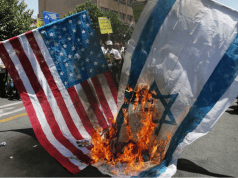
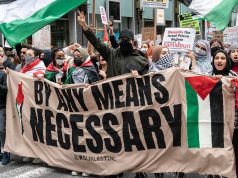
The third enemy in this war is globalism. Globalism is a natural phenomenon in our interconnected world, driven by the internet, which has erased the barriers once created by physical borders. Globalists promote values from different parts of the world within Western societies, even when those values directly conflict with or undermine Western ideals. They spread communist and Islamist ideologies into places where they do not belong, steadily eroding Western democracies until they can no longer recover. Thanks to globalists, it is far easier for Islamists and communists to push false narratives into Western schools and universities. A striking example is the pro-Palestinian student movements in the United States, which spread hatred against Jews and Israelis.
From the very beginning of globalism, it was clear that its direction was dangerous. After the First World War, the League of Nations was founded with high hopes of maintaining world order, yet the Second World War soon erupted. Today, the United Nations lacks both the strength and the Western orientation to intervene effectively in conflicts. In fact, it is often dominated by anti-Western forces. A clear example is the International Criminal Court in The Hague, which appointed a Lebanese judge to preside over cases involving Israel, a country that has repeatedly fought terrorist groups in Lebanon.
Another example is the World Economic Forum, which helps globalists reshape Western values through financial influence. Among the leading figures behind this agenda is George Soros, who under the guise of philanthropy promotes anti-Western ideas that weaken nationalism in Europe, undermine long-held traditions in both Europe and America, and encourage the spread of Islam in the West.
All three enemies of the West in this endless Third World War have found a unique method to infiltrate Western societies: the so-called deep state. The deep state consists of bureaucrats and shadow figures who operate behind the scenes in democratic countries, making decisions without regard for the will of the voters. Today, deep state networks operate in most Western European countries, in the United States, and even in Israel. Their mission is to erode Western values and advance Islamist and communist agendas among populations with democratic leanings.
Historical Examples of Endless War
The world we live in has not been quiet for a very long time. For centuries, peace has been absent; there is always some conflict or war taking place somewhere. The truth is, these struggles rarely end for good; more often, they are put on pause for a while, only to flare up again later.
One could argue that most wars in the world arise from clashes between the East and the West, between Judea-Christian culture versus Islam and between democracies and dictatorships. In fact, it could be seen as one long, ongoing war: a war of religion and culture, where each generation has found a new spark to ignite it.
For example, it was the burning of the Church of the Holy Sepulcher, which triggered the Crusades. It was the 9/11 attacks on the Twin Towers, which pushed the Americans to invade Afghanistan and Iraq. Or it could be something like France’s ban on wearing the hijab in public, which sparked an intifada in the streets of Paris. This war existed even in ancient times, back when Africa and Asia were still steeped in paganism.
But the conflict truly began with the rise of Islam some 1,400 years ago. When the Prophet Muhammad brought the message of monotheism to the Arabian Peninsula, he declared Islam to be a religion meant especially for the Arabs. Yet the conquests of his followers quickly spread beyond Arabia to Egypt, Greater Syria (modern Syria, Lebanon, and Israel), and the Persian Empire (modern Iran).
You might wonder why this matters, since the people of these regions were not so different from the Arabs of the peninsula. But that is a mistake. Egypt and Greater Syria were under Byzantine rule, “Byzantine” being the scholarly name for the eastern Romans, who continued to govern from Constantinople (modern-day Istanbul) long after the fall of Rome itself. In other words, while these lands geographically lay in the Middle East, their ruling culture was Western rather than Eastern. The same was true for Persia.
Culturally, Persians were far removed from Arabs. Even though modern Persian is written with Arabic letters, Islam is Iran’s dominant religion, and Persians often bear Arabic-Muslim names, Persian is actually an Indo-European language, closer to English than to Arabic. This demonstrates that the Persians historically were closer to Europeans than to Arabs. Persia also had a rich and ancient cultural heritage, including Zoroastrianism, its old religion. Yet when the Arabs conquered Persia around 1,300 years ago, they painted over its deep traditions with the colors of Islam and tribal desert culture, just as they did wherever they advanced.
Western culture in Syria, Egypt, and North Africa did not arrive there by accident. The first to bring Hellenistic influence to the Middle East was none other than Alexander the Great, who united Greece under his command before pushing eastward against the Persian Empire. Although Persians were Indo-European, and thus closer to Europeans than Arabs, Persia itself had been the dominant cultural power in the East, just as Greece was in the West. Ultimately, Alexander’s conquests became a war of cultures as well: his campaign was motivated by revenge against the Persians for their invasions of Greece under Darius and Xerxes.
Along the way, Alexander also spread Hellenistic culture, which survived in the Middle East under the Greeks, Romans, and Byzantines until the Arabs emerged from Arabia and imposed their desert traditions and Islam. The Muslim expansion did not stop in the Middle East and North Africa. After reaching the far western edge of Morocco, they crossed the sea and conquered Spain, which by then was already Christian. From Spain, Muslim forces pressed north toward France, but were ultimately stopped in central-western France in 732.
It is striking that France, where Islamic expansion was first halted, now appears to be one of the European countries most vulnerable to falling under Islamic influence. But that is a subject for another time. After being checked in France, Muslims did not continue their push into Europe, but this was merely a pause, not a true end.
About 630 years later, the Ottoman Turks returned to Europe from Asia Minor, advancing through the Balkans and deep into the continent. They conquered nearly the entire Balkan region and vast portions of Eastern Europe: Greece, North Macedonia, Albania, Serbia, Bosnia, Croatia, Kosovo, Montenegro, Romania, Hungary, Moldova, parts of Ukraine (including Crimea), and parts of Slovenia. Their expansion was only halted at the gates of Vienna in 1683, where a coalition of European powers finally repelled them.
After that failure, the great Ottoman Empire slowly lost all its European territories, except for the small portion of modern Turkey that still lies in Europe. Perhaps the best example of this endless war is the Mongols. Originating from Central Asia (modern-day Mongolia), they were first led by Genghis Khan. During their rise, the Mongol leadership, as well as most of their people, converted to Islam. Their empire expanded from China across most of Asia until they reached the Middle East.
The Mongols sowed terror and destruction wherever they went, earning a reputation as the scourge of nations. It is said that after conquering a village or city, they would build pyramids out of the skulls of their victims. Their brutality resembled the fear spread in our own times by ISIS in Syria and Iraq.
Why are the Mongols the best example of this ongoing war? Even though they had become Muslims, that did not stop them from destroying Baghdad, the capital of the Islamic empire at the time. The Mongols slaughtered everyone in their path, killing over 1,000,000 people, executed the caliph himself after his surrender, and burned the House of Wisdom, the great library of the Abbasid Caliphate. In doing so, they erased enormous stores of knowledge in science, medicine, mathematics, astronomy, philosophy, and translations of Greek and Persian works.
The Mongols killed indiscriminately, including Muslims, much like modern-day Islamic extremists who destroy lives and cultures across Iraq, Afghanistan, and beyond. For both the Mongols and today’s radicals, it does not matter whether their victims are Muslims or “infidels”; the only question is whether they submit or must be forced to.
We must learn from history and draw lessons for the present if we are to create a better future. This endless war will likely continue until the West understands that it must do everything in its power not only to contain it, but to win it. And as things stand, that victory may only come when the West works hand in hand with the State of Israel, the very place where the Mongols first tasted defeat in the Middle East.
To the misfortune of the Western world, we are in the midst of an endless war that can already be classified as a Third World War. On one side, stands pro-Western forces that uphold civil rights and democracy, and on the other stands anti-Western forces that uphold the values of an unelected dictatorship. The enemies of the West fight daily on multiple global fronts, doing everything possible to harm the West militarily, economically, energetically, and morally. Since this is an endless war, we must confront it according to methods that have already been proven effective by those who sought to stop wars without end.
At present, the leaders of Western states are not acting in the right way; indeed, instead of protecting their nations, they are often undermining the security of their own citizens. First, in order to win this war, the West must fully recognize its scale and its power. This is a Third World War. There are more than twenty active fronts and more than five states that have joined together with the intention of striking the West in every possible way until it loses both its uniqueness and its values.
The first nation that must absorb this reality is, of course, the United States, under President Donald Trump, which has not yet grasped that not only has the war been underway for many years, but that America itself is already a participant in it in several different ways. The West must understand who its enemies are, for without that clarity it will not know how to fight for its future.
In truth, the enemies of the West fall into three groups: Islamists, communists, and globalists—people who, in the name of globalism, inject anti-Western values into the heart of the West. These three groups employ at least seven distinct strategies of warfare, forcing the West, under America’s leadership, to coordinate and adopt a broad strategic outlook. Although some of these enemies are non-state actors, such as the Muslim Brotherhood, which operates freely in both Europe and the United States, some states must be defined as enemies by any Western nation that wishes to preserve its liberal and democratic character.
Beyond recognizing hostile groups, the West must also distinguish between states that support the West—or at least refrain from interfering with its character and values, such as the United Arab Emirates, which is not itself Western in its values but still acts as a Western ally—and states that actively oppose the West. The greatest weakness of Western leaders is their inability to recognize when they are being deceived about intentions or motives.
A country like the Islamic Republic of Iran should not have diplomatic relations with Western Europe, and certainly should not cooperate with the United States or the European Union. Iran has dispatched scores of suicide bombers to carry out attacks around the Western world, killing thousands of innocent people both in the East and in the West.
Another example is Qatar, which has carried out actions almost beyond belief. Even while it was formally part of the coalition against ISIS, Qatar continued to channel millions of dollars to the murderous terror organization. Qatar bribes corrupt officials in key positions across European and Western governments, including, it appears, FIFA officials in connection with hosting the World Cup. Most importantly, Qatar is a major sponsor of the Muslim Brotherhood.
The Brotherhood, under the guise of charitable work, strengthens Islamic identity among Europe’s Muslims, radicalizes them, narrows their worldview into one of black-and-white morality, and fosters hatred of Western values. The Brotherhood organizes the majority of antisemitic and anti-Israeli demonstrations in Europe and the United States. Hamas itself originated as the Brotherhood’s branch in Gaza. Qatar is also the largest financial supporter of Hamas, which was responsible for the worst massacre of Jews since the Holocaust.
Beyond Iran and Qatar, the West must open its eyes and classify Russia, China, Turkey, and Pakistan as official enemies. It may well be that the West must act more aggressively and even seek to change the regimes of the most dangerous states. At present, the most urgent case is Iran, a highly dangerous Shiite regional power in the Middle East. Following military setbacks at the hands of Israel and the United States, the ayatollahs’ regime no longer grips the country as firmly as before.
Other regimes that must follow are Putin’s Kremlin, Xi Jinping’s ruthless communist government, and Erdoğan’s erratic rule in Turkey, driven by his dream of becoming a sultan. The paradox is that even in Western states such as Britain and France, regime change may be necessary. Both countries are undoubtedly Western, but they have allowed anti-Western forces to grow strong within their borders, sometimes with the state’s active assistance.
Liberal European states must legislate restrictions to halt the spread of the Muslim Brotherhood and similar organizations, as well as communist groups operating within Western Europe. Without such measures, the West will have little chance of victory.
Another step the West must take is the unification and strengthening of NATO so that it can fulfill its purpose. NATO was created to defend Western Europe against the Russian threat. As seen before the outbreak of the Russia-Ukraine war, NATO lacked sufficient power to deter or halt Moscow. If stronger deterrent weapons are needed, or new allies must be added, the member states must take those steps. In addition, Europe may need to form a new alliance, not against Russia or communism, but against Islamism.
If all European states facing mass Muslim immigration and visible Islamist activity on their streets joined forces, they could monitor and counter those activities more effectively and reach a Europe-wide solution. The Islamist challenge is a continent alone, and only collective European action can resolve it. Otherwise, demographic change will eventually give Islamists the democratic power to alter the nature of the West.
The West must also restore deterrence. Any state that acts against the West must face severe economic sanctions that destabilize its economy. Russia must face harsher sanctions, Turkey must be punished for its sponsorship of terrorism and subversive activity, and China must also be made to pay a heavy price. The United States and other Western countries must stop producing goods in China, thereby strengthening their enemy. There are enough allied states that can provide inexpensive production.
Deterrence, however, must not rely only on economic pressure. Military force must also be part of the response, however reluctant Europeans may be. Every enemy of the West must know that any anti-Western action will be met with painful military strikes and heavy losses on the battlefield. Even non-military actions can merit a military response, depending on the scale of the threat to Western values. For this reason, the West should begin with the enemy that has carried out the widest military aggression in recent decades: Iran.
Although Russia has been fighting in Ukraine for over three years, Iran is engaged not with one state, but with the entire West. The ideology of the Islamic Revolution seeks to strangle Western values in the Middle East and beyond. The Israeli-Iranian conflict exists primarily because Israel is the nearest Western state to Iran, and Tehran exploits the false Palestinian narrative to justify its fight against Israel, which it calls the “little Satan” (while the United States is the “great Satan”).
Iran must be stripped of its nuclear weapons and its terrorist organizations—Hezbollah in Lebanon, the Houthis in Yemen, and Kataib Hezbollah in Iraq—must be destroyed. Its naval forces must also be neutralized. Only then will the West be able to restore its influence in the Middle East and weaken the anti-Western bloc there.
The West must also arm Israel and strengthen it significantly. Israel has been fighting the most dangerous anti-Western forces for nearly two years. Weakening Hamas, which is directly tied to the Muslim Brotherhood, and weakening Iran, are achievements that serve the West itself.
Israel has also dealt a severe blow to Hezbollah, which is deeply involved in the global drug trade and supplies the cartels of South America that poison Western youth. The fall of Assad, an ally of the anti-Western camp, followed from this weakening, ending the rule of a man with the blood of thousands of innocent Syrians on his hands. Without fully realizing it, Israel has become the front line fighter for the West, while Europe squanders Western values for the fleeting fashion of false moralism.
It seems that not only America must adopt the principle of “America First,” but the West as a whole must do the same. “America First” means the United States must strengthen itself: secure its borders, expel foreign criminals, expand its defense budget, and fortify essential infrastructure against attack. Once all Western nations adopt similar priorities, the West will be a safer place.
This endless Third World War is happening all around us, even when we do not feel it. Enormous global forces are working to bring the West under the sway of Islamism and communism. In this war, every individual can take part, for one of its most powerful weapons is the spread of fake news online. Anyone who encounters a lie that harms the West must counter it with the truth. Through truth, the citizens of the West can prevail against anti-Western forces of deception. The West must stand firm, strong, and confident against its enemies in this endless war, for only then can it remain what it has always been.