
GUEST POST: Blueprint for Accountability: A Modern Nuremberg Could Bring Iran’s Leaders to Justice
By Rachel Avraham
For decades, the international community has treated the Iranian regime as a problem to be managed, rather than a crime syndicate to be confronted. Diplomacy has been favored over accountability, engagement over justice, and deterrence over legal reckoning. Yet history shows that regimes responsible for systematic violence do not reform through dialogue alone. They are stopped—and delegitimized — when their leaders are placed before the law.
The question is no longer whether Iran’s leadership has committed crimes warranting an international tribunal. The question now is whether the world is prepared to act on what it already knows.
The case against Iran’s ruling elite is not speculative. It is documented, cumulative, and ongoing. Unlike authoritarian regimes whose crimes are confined to internal repression, Iran’s leadership has built an export model of violence. Its actions span borders, continents, and decades, creating a pattern of conduct that meets the threshold for crimes against humanity and, in several instances, war crimes.
Domestically, the Iranian state governs through fear. Since the 1979 Islamic Revolution, the regime has institutionalized repression as a governing tool. Mass executions of political prisoners in the 1980s — particularly the 1988 prison massacres, where thousands were executed following summary proceedings — remain one of the most severe – yet unresolved -crimes of the late twentieth century. Many of today’s senior officials, including figures in the judiciary and security services, were directly involved in these events. They were not rogue actors. They were functionaries implementing state policy.
The pattern has continued into the present. Peaceful protests — most recently those following the arrest, torture, and death of Mahsa Amini, and the Bazaar Protests — have been met with lethal force, executions, mass arrests, torture, and forced confessions. Women, journalists, lawyers, and ethnic minorities have been systematically targeted. These actions are not isolated abuses; they form a coherent strategy to suppress dissent through terror.
Under international law, widespread or systematic attacks against a civilian population constitute crimes against humanity, regardless of whether they occur in wartime. Externally, Iran’s record is equally horrific. Through the Islamic Revolutionary Guard Corps(IRGC) and its Quds Force, Tehran has orchestrated and financed armed terror groups across the Middle East. Hezbollah in Lebanon, militias in Iraq, the former Assad regime in Syria, Hamas and Palestinian Islamic Jihad, and the Houthis in Yemen all operate with Iranian funding, training, and strategic direction. These proxies have committed war crimes, targeted civilians, used human shields, and destabilized entire regions.
In Syria, Iranian forces and their allied militias played a decisive role in sustaining a regime responsible for chemical attacks, mass displacement, and indiscriminate bombing of civilian areas. In Yemen, Iranian support for the Houthis has contributed to one of the world’s worst humanitarian crises. In Israel and beyond, Iranian-backed terror networks have targeted civilians as a matter of doctrine.
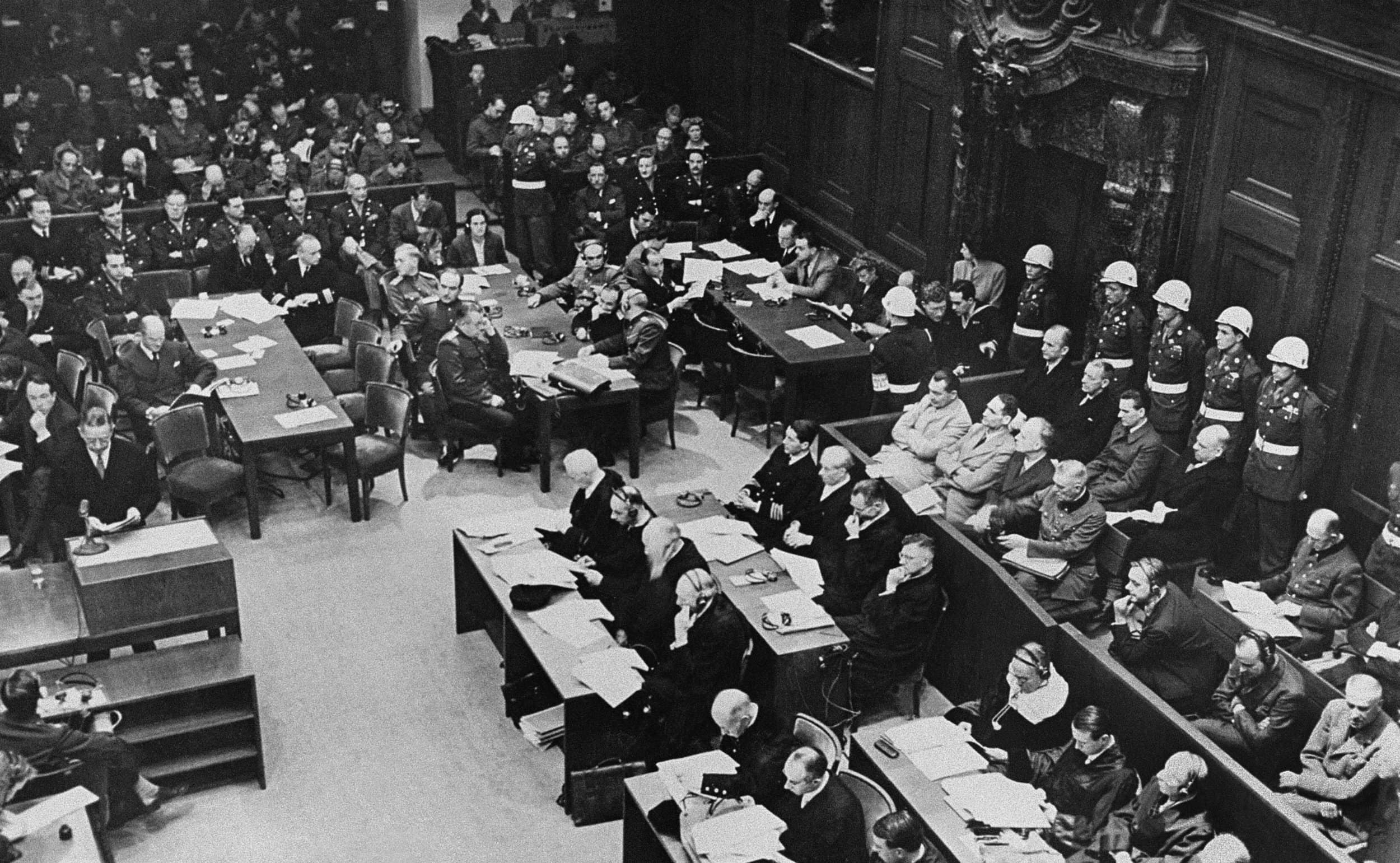
What makes Iran distinct is not merely the scale of its actions, but the coherence of its command structure. These crimes are not committed by disconnected militias acting independently. They are directed, coordinated, and sustained by state institutions. This establishes individual criminal responsibility at the highest levels of leadership — precisely the principle affirmed at Nuremberg.
A modern tribunal for Iran would not require reinventing international law. The legal architecture already exists. Universal jurisdiction, which allows national courts to prosecute grave international crimes regardless of where they were committed. It has been used successfully against perpetrators from Rwanda, the former Yugoslavia, and Syria.
The International Criminal Court, while constrained by jurisdictional limits, has developed extensive jurisprudence on crimes against humanity that can inform alternative mechanisms:
One viable path is the establishment of a special international tribunal through a coalition of states, modeled on the tribunals for Yugoslavia and Rwanda.
Another is the creation of a hybrid court, combining international judges with national jurisdictions willing to prosecute Iranian officials under universal jurisdiction statutes.
A third avenue lies in coordinated national prosecutions, supported by a shared evidentiary framework and arrest warrants issued across multiple jurisdictions.
The evidentiary foundation is already substantial. United Nations reports, human rights organizations, survivor testimonies, defectors, digital forensics, satellite imagery, and intercepted communications provide a robust factual record. Unlike in the aftermath of World War II, where investigators raced against time to document atrocities, today’s crimes are recorded in real time. The challenge is not evidence — it is political will.
Critics argue that prosecuting Iranian leaders would destabilize the region or close diplomatic channels. History suggests the opposite. Accountability weakens regimes by stripping them of legitimacy, fracturing elite cohesion, and empowering internal reform movements. The fear of prosecution alters behavior, constrains options, and signals that impunity has limits.
There is also a strategic dimension that is often overlooked: Iran’s leadership derives strength from the perception that it is untouchable. Breaking that perception — through indictments, arrest warrants, and legal isolation — would recalibrate regional power dynamics without a single military strike. It would also reinforce a global norm that exporting terror and repressing populations carries personal consequences.
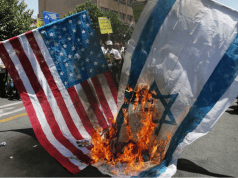
For Israel, the stakes are immediate. Iran is not a distant authoritarian state; it is an existential adversary actively seeking regional dominance and openly calling for Israel’s destruction. Legal accountability is not a substitute for deterrence, but it is a force multiplier. It delegitimizes aggression and exposes the regime’s ideology as criminal rather than revolutionary. For the West, particularly the United States and Europe, an Iran tribunal would represent a corrective to decades of selective justice. It would demonstrate that international law is not applied only to defeated states or marginal actors, but to regimes whose crimes persist under the cover of diplomacy.
A modern Nuremberg for Iran would not be about revenge. It would be about restoring coherence to the international legal order. The lessons of the twentieth century are clear: when mass crimes go unpunished, they are repeated. When leaders believe they will never face a courtroom, they act accordingly. The Iranian people deserve more than sanctions and statements of concern. They deserve justice. So do the victims of Iran’s regional campaigns — from Beirut to Damascus, from Tel Aviv to Sana’a. Accountability will not come easily. It never does. But neither did Nuremberg. And yet the world is still measured by whether it chose law over silence.
The blueprint exists. The crimes are known. History will judge not only those who committed them — but those who chose, once again, to look away.